
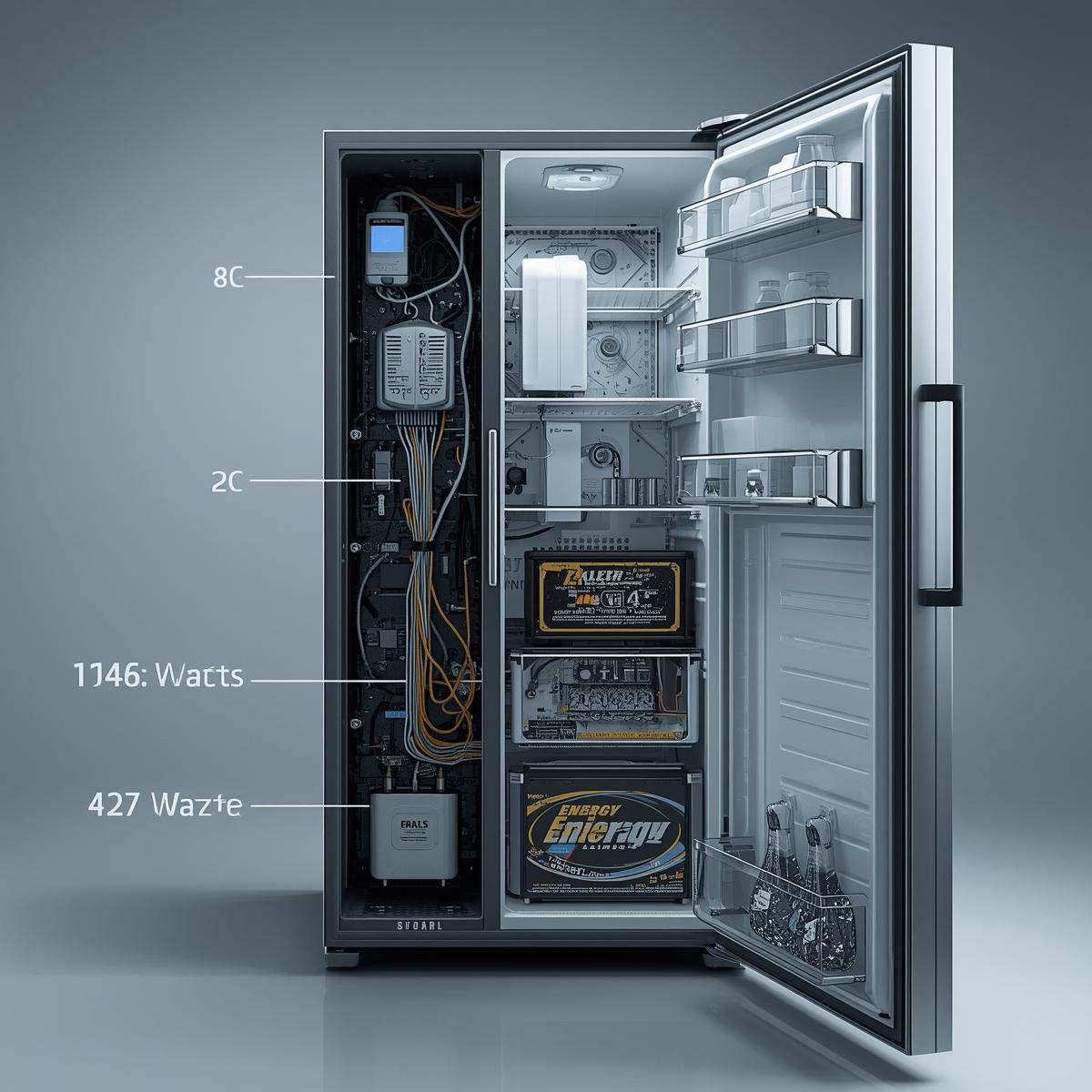

Ever wondered how many watts to run a refrigerator? Whether you’re planning to use a generator during a power outage, calculating your energy bills, or choosing the right appliance, knowing the power requirements is crucial. Refrigerators are essential in every household, but their energy usage can vary widely depending on size, model, and features. In this guide, we break down the numbers, explain peak vs. running watts, and help you plan for both refrigerators and freezers.
Understanding Refrigerator Wattage
Refrigerators don’t run continuously at full power—they cycle on and off to maintain temperature. Here’s what to consider:
-
Running watts: The energy the fridge uses while operating normally.
-
Starting or surge watts: The extra energy required when the compressor starts.
Typical ranges:
-
Small mini-fridge: 100–250 watts running, 300–600 watts surge
-
Standard fridge: 150–400 watts running, 600–1200 watts surge
-
Large refrigerator/freezer combo: 350–600 watts running, 1200–1800 watts surge
Pro tip: Always check the manufacturer’s label or manual for exact wattage information.
How Many Watts to Run a Refrigerator Per Hour
To calculate how many watts to run a refrigerator per hour, consider:
-
Running watts × hours of operation
-
Average cycle percentage: Refrigerators usually run 30–50% of the time
Example:
-
350-watt fridge running 12 hours per day
-
Average running time: 50% → 350 × 0.5 = 175 watts per hour
-
Daily energy usage: 175 × 12 = 2100 watt-hours (2.1 kWh)
This helps in estimating electricity costs or generator requirements.
Running a Refrigerator on a Generator
If you’re planning to use a generator, knowing generator how many watts to run a refrigerator is key:
-
Starting watt requirement: The generator must handle the initial surge.
-
Running watt requirement: Continuous power must match the fridge’s running watts.
Tips for generator use:
-
Use a generator rated at least 20–30% higher than the fridge’s starting watts.
-
Keep the fridge doors closed to maintain temperature and reduce load.
-
Avoid connecting multiple high-watt appliances unless the generator can handle it.
How Many Watts to Run a Refrigerator and Freezer
Running both a refrigerator and freezer requires more power. Here’s a rough guide:
-
Refrigerator: 150–400 watts running, 600–1200 watts surge
-
Freezer: 200–500 watts running, 800–1500 watts surge
-
Combined peak surge: Add both starting watts to ensure your power source can handle it
Tip: Surge wattage matters most for generators; don’t rely only on running watts.
Energy-Saving Tips for Refrigerators
-
Set the temperature correctly: 37–40°F for fridge, 0–5°F for freezer
-
Keep doors closed: Avoid warm air influx
-
Defrost regularly: Frost buildup increases energy use
-
Energy-efficient models: Look for ENERGY STAR-rated refrigerators
FAQs
1. How many watts does a mini-fridge use?
Typically, 100–250 watts running and 300–600 watts surge.
2. Can I run a large fridge on a 1000-watt generator?
It depends on the starting watts. Most large fridges need 1200–1800 watts for the initial surge.
3. How do I calculate refrigerator power usage?
Multiply running watts by hours used and factor in average cycle percentage (usually 30–50%).
4. Does a freezer use more watts than a refrigerator?
Usually, yes. Freezers often have higher running and starting watts, especially chest freezers.
Conclusion
Understanding how many watts to run a refrigerator is essential for budgeting electricity or using a generator safely. Consider running vs. starting watts, per-hour energy usage, and combined loads with freezers. By following these guidelines, you can choose the right generator, reduce energy costs, and keep your food safe.