

For more than a decade, smartphones have been the center of our digital lives. But that era may be nearing its peak. Today, tech giants envision future beyond smartphones, investing heavily in new technologies that promise to reshape how we work, communicate, and interact with the world.
From AI-powered assistants to immersive wearables, the next big shift in consumer tech is already taking shape—and it doesn’t fit in your pocket.
Why Tech Giants Are Looking Beyond Smartphones
Smartphone innovation has slowed. Annual upgrades feel incremental, and global sales have plateaued in many regions. This has pushed major technology companies to rethink what the “next primary device” might be.
Key Reasons for the Shift
-
Market saturation in smartphones
-
Longer device replacement cycles
-
Rising consumer interest in hands-free technology
-
Advances in AI, sensors, and cloud computing
For tech leaders, standing still is not an option.
Artificial Intelligence: The New Digital Interface
One of the clearest signs that tech giants envision future beyond smartphones is the rise of AI-first experiences. Instead of tapping screens, users are beginning to talk, gesture, and interact naturally.
How AI Is Replacing Traditional Interfaces
-
Voice assistants that handle complex tasks
-
Context-aware AI that anticipates user needs
-
On-device machine learning for privacy and speed
Rather than opening apps, users may soon rely on AI systems that act as digital companions.
Wearables and Smart Devices Take Center Stage
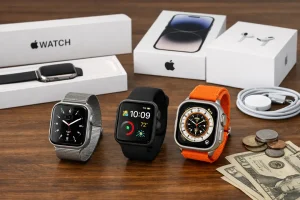
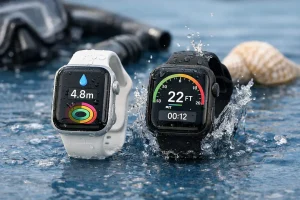
Wearables are no longer just fitness trackers. They’re evolving into powerful computing tools that reduce reliance on smartphones.
| Device Type | Primary Function | Why It Matters |
| Smart Glasses | AR navigation, communication | Hands-free computing |
| Smart Rings | Health tracking, authentication | Minimalist tech |
| Advanced Watches | Calls, payments, AI alerts | Phone-free convenience |
These devices align with a future where technology blends seamlessly into daily life.
Augmented Reality and Spatial Computing
Augmented Reality (AR) is another reason tech giants envision future beyond smartphones. Companies are investing in spatial computing—digital content layered naturally onto the physical world.
Potential AR Use Cases
-
Navigation overlays while walking or driving
-
Virtual workspaces without screens
-
Real-time translations and visual instructions
Instead of staring down at phones, users may soon look up and interact with their environment digitally.
The Rise of Ambient and Invisible Technology
Ambient computing focuses on technology that fades into the background while still being useful. Sensors, AI, and cloud services work quietly, responding only when needed.
Examples of Ambient Tech
-
Smart homes that adjust automatically
-
Cars that act as digital hubs
-
Workspaces that adapt to user behavior
This shift emphasizes experience over hardware.
What This Means for Consumers
As tech giants envision future beyond smartphones, users can expect technology to feel more natural and less intrusive.
Benefits for Everyday Users
-
Less screen time
-
Faster access to information
-
More personalized digital experiences
-
Improved accessibility
The goal isn’t to eliminate smartphones overnight—but to reduce dependence on them.
Challenges Tech Giants Still Face
Despite progress, this transition isn’t simple.
-
Privacy concerns around always-on devices
-
Battery life limitations
-
Social acceptance of wearables
-
High development costs
Solving these issues will determine how fast the post-smartphone era arrives.
Frequently Asked Questions (FAQs)
Are smartphones going away completely?
No. Smartphones will remain relevant for years, but they may no longer be the primary computing device.
Which tech companies are leading this shift?
Major players like Apple, Google, Meta, Microsoft, and Amazon are all investing in post-smartphone technologies.
What will replace smartphones?
There likely won’t be one replacement device. Instead, a combination of wearables, AI assistants, and ambient systems will share the role.
Is this future already happening?
Yes. Early versions exist today through smartwatches, AI assistants, and AR devices.
Conclusion: A World Beyond the Smartphone Screen
The idea that tech giants envision future beyond smartphones is no longer speculation—it’s strategy. As AI, wearables, and ambient computing mature, technology will shift from something we hold to something that surrounds us.
For consumers, this means more freedom, less friction, and smarter digital experiences. If you’re curious about where innovation is headed next, now is the perfect time to explore the technologies shaping our post-smartphone world.