
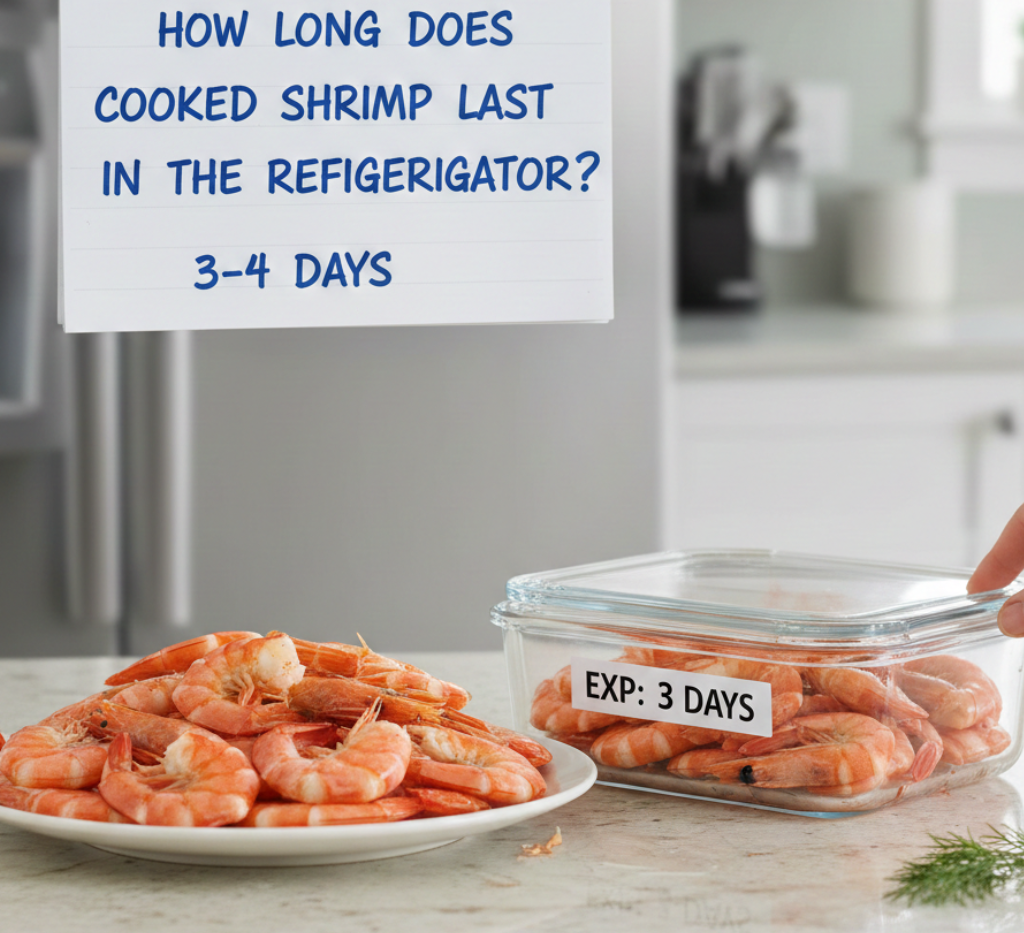

Cooked shrimp lasts 3 to 4 days in the refrigerator when stored properly. Because seafood has naturally high perishability, it must be chilled quickly after cooking using the rapid cooling method and kept below 40°F. To stay safe, get your shrimp out of the food safety danger zone fast and check for spoilage signs before eating.
Seafood is one of the most delicate proteins you can cook, and it doesn’t forgive shortcuts. Whether you sautéed shrimp for tacos or steamed a batch for meal prep, understanding exactly how long does cooked shrimp last in the refrigerator is essential—because shrimp spoils faster than most foods.
The definitive answer: Cooked shrimp lasts 3 to 4 days in the refrigerator, provided it was cooled properly and stored in airtight containers.
Let’s break down the science, the safety rules, and the storage steps you should never skip.
The Definitive Shelf Life: 3 to 4 Days
Most major food safety authorities—including the USDA and FDA—agree on one strict guideline:
Cooked shrimp shelf life is 3 to 4 days in the refrigerator.
Seafood spoils quickly because:
-
It contains enzymes that break down tissue faster than meat or poultry.
-
Bacteria multiply rapidly once seafood enters the food safety danger zone (40°F–140°F).
-
The delicate structure of shrimp makes it more vulnerable to temperature abuse.
Bottom line: If it’s been more than 4 days, toss it. Don’t gamble with seafood.
The Rapid Cooling Method (Don’t Skip This Step)
Keeping cooked shrimp safe starts the moment it leaves the heat.
Shrimp must cool fast to avoid spending too long in the food safety danger zone.
Key Rules for Rapid Cooling
-
Get cooked shrimp into the fridge within 2 hours of cooking (within 1 hour if the room is above 90°F).
-
Use shallow containers—they release heat faster than deep bowls.
-
Spread shrimp into a single layer when possible to speed up cooling.
-
Never store hot shrimp in sealed containers; steam encourages bacterial growth.
A few minutes of quick cooling is one of the simplest—but most powerful—food safety tools you have.
Storage Best Practices for Maximum Freshness
Storing shrimp properly helps you squeeze out the full 3–4 day shelf life.
Use airtight, shallow storage containers
Shallow containers cool shrimp faster and prevent lingering heat from spoiling the batch.
Store shrimp in the coldest part of your refrigerator
Usually the back lower shelf—not the door, which fluctuates in temperature.
Don’t store shrimp in its original takeout container
Thin plastic or foam traps moisture and encourages spoilage.
If shrimp was left out on the counter for over 2 hours, throw it away
No reheating method can “kill off” all dangerous bacteria once toxins develop.
Warning Signs: How to Spot Shrimp Spoilage
Even within the 3–4 day window, shrimp can spoil early if mishandled. Trust your senses.
Signs your cooked shrimp has gone bad:
-
Slimy or sticky texture
Fresh shrimp should feel firm and slightly springy—not slippery. -
Ammonia or sour smell
A strong, unpleasant odor means the shrimp is unsafe. -
Dull, faded, or discolored appearance
Grey patches or yellowing are red flags. -
Excessive moisture or a cloudy liquid in the container
Indicates bacterial activity.
When in doubt, throw it out. Safety first.
FAQs
1. Can I freeze cooked shrimp?
Yes—cooked shrimp freezes extremely well. Store it in freezer-safe bags or airtight containers and use within 2–3 months for best quality.
2. What temperature should my fridge be?
Your refrigerator should always stay at 40°F (4°C) or below, which slows bacterial growth and preserves seafood longer.
3. Does seasoning affect the storage time?
No. Sauces, marinades, or spices do not extend shrimp’s shelf life. The 3–4 day rule still applies.
4. Can reheating make spoiled shrimp safe?
No. Reheating does not destroy the toxins produced by bacteria. If shrimp smells off or is older than 4 days, discard it.
Conclusion
Cooked shrimp is safe for just 3 to 4 days in the refrigerator, and only when cooled quickly and stored correctly. With seafood, safety is non-negotiable—so trust the guidelines, watch for spoilage signs, and keep your fridge cold and organized.