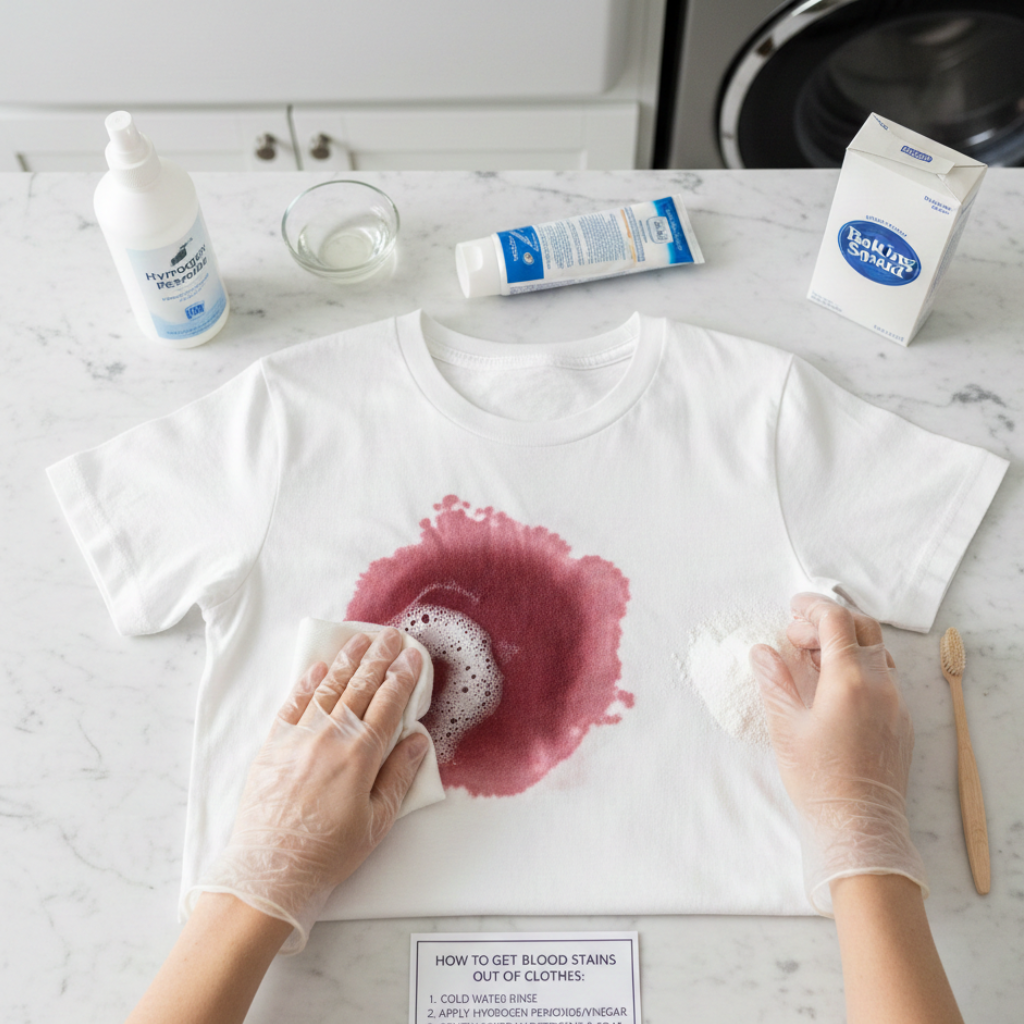

The most important rule for how to get blood stains out of clothes is to use cold water blood stain removal, because heat causes the proteins in blood to coagulate and permanently bind to fabric. Fresh stains rinse out quickly, but how to get blood stains out of clothes after drying requires a set-in blood stain hack using an enzyme cleaner for blood or hydrogen peroxide. Always air dry the garment until the stain is fully removed to avoid setting it further.
Introduction
There’s a specific kind of dread that hits when you notice a blood spot on your favorite shirt. Even tiny stains look dramatic, and most people worry they’re instantly permanent. But as a Laundry Biochemist, I can promise you this: once you understand the science behind protein stain treatment, you’ll know exactly how to get blood stains out of clothes—and why a single wrong step can make the stain nearly impossible to remove.
Blood is made of proteins, especially hemoglobin. The moment heat touches those proteins, they coagulate—essentially “cooking” themselves deeper into the fibers. That’s why the key to removing blood isn’t elbow grease… it’s biochemistry. And it all starts with one rule: always use cold water.
Let’s break down exactly what to do for fresh stains and—more importantly—how to get blood stains out of clothes after drying.
The Golden Rule: Cold Water Blood Stain Removal
The very first step of any protein stain treatment is cold water. Never warm. Never hot and Never heat of any kind.
When heat is introduced:
-
Blood proteins coagulate
-
The stain binds more tightly to fabric
-
Even the best enzyme cleaner for blood becomes less effective
-
The stain can become permanent
This is why you must avoid:
-
Hot water
-
Steam
-
The dryer
-
Sun-drying before the stain is gone
Cold water keeps the protein molecules loose, mobile, and removable.
Stage 1 — Attacking the Fresh Stain
Fresh blood is the easiest form to remove because the proteins haven’t yet set. Act quickly and follow these steps:
Step 1: Immediate Rinse (Cold Only)
Turn the fabric inside out and flush the stain from the back using cold running water. This pushes the blood out the same direction it entered.
Step 2: Salt Paste or Soap
For light stains:
-
Make a paste with salt + cold water and gently rub
-
OR use liquid laundry detergent and work it into the fibers
Salt acts as a gentle abrasive, while detergent helps break surface tension.
Stage 2 — The Set-In Blood Stain Hack (Dried or Old Stains)
This is where most people struggle. If the stain has dried, heat or time has partially set the proteins. You’ll need either enzymatic action or chemical oxidation.
This is the essential section for how to get blood stains out of clothes after drying.
Option A — Enzyme Cleaner for Blood (Most Effective)
Enzymes like protease break down the protein chains in dried blood so they can be washed away.
How to Use It:
-
Mix cool water with an enzyme cleaner for blood (or an enzyme laundry detergent).
-
Submerge the garment completely.
-
Soak for several hours—overnight for stubborn stains.
-
Gently scrub, then rinse in cold water.
Enzymes do the work your hands cannot. They literally digest the protein so it releases from fabric.
Option B — Hydrogen Peroxide Blood Stain Treatment
Hydrogen peroxide works through oxidation—it breaks apart the color-causing molecules in blood.
How to Use It:
-
Test on a hidden seam first.
-
Apply 3% hydrogen peroxide directly to the stain.
-
Let it bubble for 5–10 minutes.
-
Blot with a clean cloth.
-
Rinse with cold water.
Important Warning:
Peroxide can lighten dark fabrics, wool, and silk. Use with caution.
Step 3: Wash Cold and Repeat
After either treatment:
-
Wash the clothing in cold water
-
Inspect in bright light while the garment is still wet
-
Repeat the process if needed
-
Air dry only
Never put a stained garment in the dryer—it will set the stain permanently.
Quick Tips for Delicate Fabrics
-
Silk & Wool: Avoid peroxide entirely; use only mild detergent or a silk-safe enzyme formula.
-
Lace: Skip rubbing—soak only.
-
Dry-clean-only items: Blot with cold water and let a professional handle the protein stain treatment.
Read also <<< How to Remove Sharpie from Clothes
Frequently Asked Questions
1. Does milk or vinegar work on blood stains?
Milk may help with light stains, but it’s far less effective than enzymes. Vinegar is weak for protein stains.
2. How long should I soak a dried stain using the set-in blood stain hack?
Anywhere from 2 hours to overnight, depending on how deeply the protein has bonded.
3. Can I use chlorine bleach on white cotton?
Technically yes, but it’s not the best first choice. Enzymes and peroxide are safer and more effective for blood.
4. Why is cold water so important for protein stain treatment?
Because heat causes blood proteins to coagulate—similar to cooking an egg—making the stain harder or impossible to remove.
Conclusion
The secret to mastering how to get blood stains out of clothes is understanding the biochemistry. Cold water keeps proteins from setting, enzymes break apart dried stains, and peroxide can lift stubborn discoloration. With these methods—and the non-negotiable cold-water rule—you’ll win every time.
Armed with an enzyme cleaner for blood and the cold water blood stain removal method, you never have to fear a blood stain again.