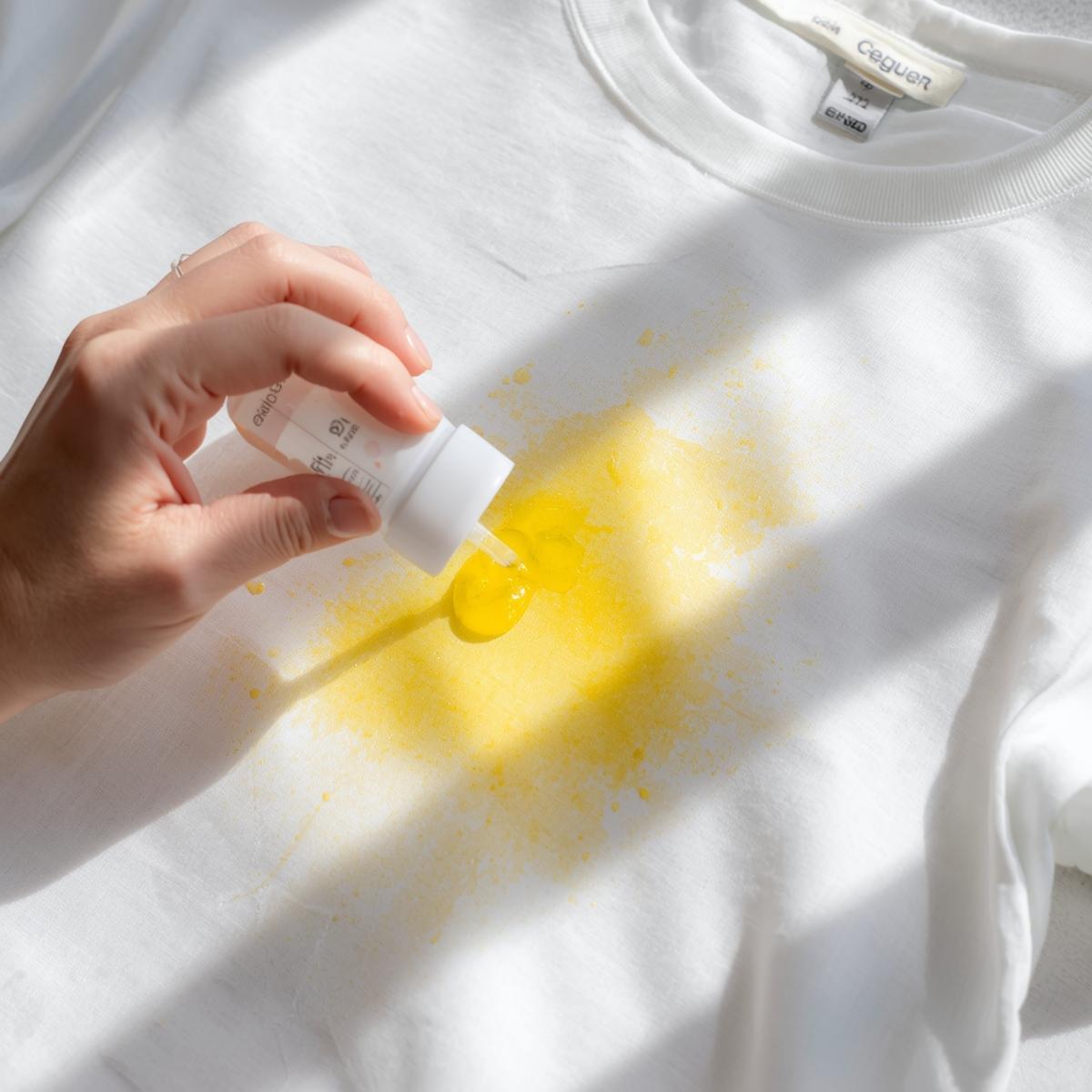

Yellow stains on white clothes come in two forms: deodorant-based armpit stains, best treated with a peroxide and baking soda paste, and age-related yellowing, which responds best to an oxygen bleach soak. For stubborn sweat stains, pre-treating with a distilled white vinegar soak helps dissolve mineral buildup. Avoid chlorine bleach on deodorant stains—its reaction with aluminum compounds can make the yellowing even darker.
Few laundry problems feel as discouraging as yellow stains on your favorite white shirt—especially when they appear even on freshly washed garments. Whether the discoloration is from aluminum-based deodorant or from years of oxidation, it is fixable with the right chemistry. If you’re searching for how to remove yellow stains from white clothes, the key is distinguishing what kind of yellowing you’re dealing with, and then using the correct remedy.
This guide covers both home remedies and advanced methods, including how to remove yellow stains from white clothes with bleach, plus notes tailored for readers in the UK (hard water areas).
The Two Types of Yellowing
Type 1: Deodorant & Sweat Stains (Armpits)
These stains occur when aluminum salts from antiperspirant react with proteins in sweat, forming a yellow, stiff residue that bonds to cotton fibers. Standard detergent alone won’t dissolve this compound—you need a targeted reaction.
Type 2: Age-Related or Overall Yellowing
Over time, white fabrics oxidize. Add in body oils, detergent residue, and mineral-heavy water (common in UK hard-water regions, sometimes called “rust belt yellowing”), and the fabric slowly turns cream or yellow. These stains require an oxygenation process rather than spot cleaning.
Best for Deodorant Stains: The Peroxide and Baking Soda Paste
If your main concern is how to remove armpit stains, this is the most reliable science-backed approach. Hydrogen peroxide acts as a mild oxidizer that breaks down organic compounds, while baking soda provides gentle abrasion.
Step-by-Step: Peroxide + Baking Soda Paste
-
Mix the solution:
-
2 tablespoons hydrogen peroxide (3%)
-
1 tablespoon baking soda
-
1 tablespoon water
-
-
Stir until a thick paste forms.
-
Apply directly to the yellow stain, coating it generously.
-
Gently scrub with your fingers (avoid hard brushes on delicate fabrics).
-
Let sit for 30 minutes—this allows the peroxide to break down the aluminum-protein bonds.
-
Rinse thoroughly.
-
Wash in warm water with your usual detergent (no chlorine bleach).
Pre-Treatment Vinegar Soak
Before applying the paste, consider a distilled white vinegar soak:
-
Mix 1 cup vinegar in 1 liter of warm water.
-
Soak stained areas for 30 minutes.
-
Vinegar helps dissolve deodorant mineral deposits, boosting the paste’s effectiveness.
This combination is among the most effective home remedies for deodorant stain removal.
Best for Age-Related Yellowing: The Oxygen Bleach Soak
If your entire garment looks dull or “off-white,” you’re not dealing with deodorant but oxidation. The solution is an oxygen bleach soak (using sodium percarbonate, not chlorine).
This method is ideal for those searching for how to remove yellow stains from white clothes UK, where mineral-heavy water often contributes to dinginess.
How to Perform an Oxygen Bleach Soak
-
Fill a bucket or sink with hot water (as hot as the fabric safely allows).
-
Add the recommended amount of oxygen bleach (e.g., OxiClean or any non-chlorine brand).
-
Stir to dissolve fully.
-
Submerge the entire garment.
-
Soak for 6 hours or overnight—oxygen bleach works slowly but deeply.
-
Wash normally afterward.
This method lifts oxidation, residue, and long-term yellowing without damaging fibers.
The Chlorine Bleach Warning
Some guides encourage using chlorine bleach for whitening—but this can be a disaster for deodorant stains.
Why You Must Be Cautious
-
Chlorine bleach reacts with aluminum compounds, turning yellow stains darker and more permanent.
-
It can also weaken cotton fibers over time.
-
Only use chlorine bleach when you’re absolutely sure the yellowing is from oxidation, not sweat.
This is why how to remove yellow stains from white clothes with bleach should be treated as a last resort—and never for armpit stains.
Read also <<<< How to Remove Gum from Clothing
FAQs
1. Do I need hot water for these methods?
Hot water improves the performance of oxygen bleach and helps break down body oils, but always check your garment’s care label first.
2. Does lemon juice work for yellow stains?
It can help with mild oxidation, but it’s less effective than peroxide or oxygen bleach and may cause discoloration in sunlight.
3. Is liquid oxygen bleach the same as powder?
Powder is usually stronger because it contains sodium percarbonate. Liquid versions are milder and better for delicate fabrics.
4. How do I know which type of stain I have?
Stiff, localized, yellow patches near the armpits indicate deodorant stains. Overall dinginess means oxidation or hard-water yellowing.
Conclusion
Yellow stains don’t have to spell the end for your favorite whites. Use a peroxide and baking soda paste for targeted deodorant stains and a long oxygen bleach soak for all-over yellowing. With the right chemistry—and a little patience—you can restore fabrics to bright, crisp whiteness.
If you want a personalized plan based on your exact fabric type, feel free to ask!