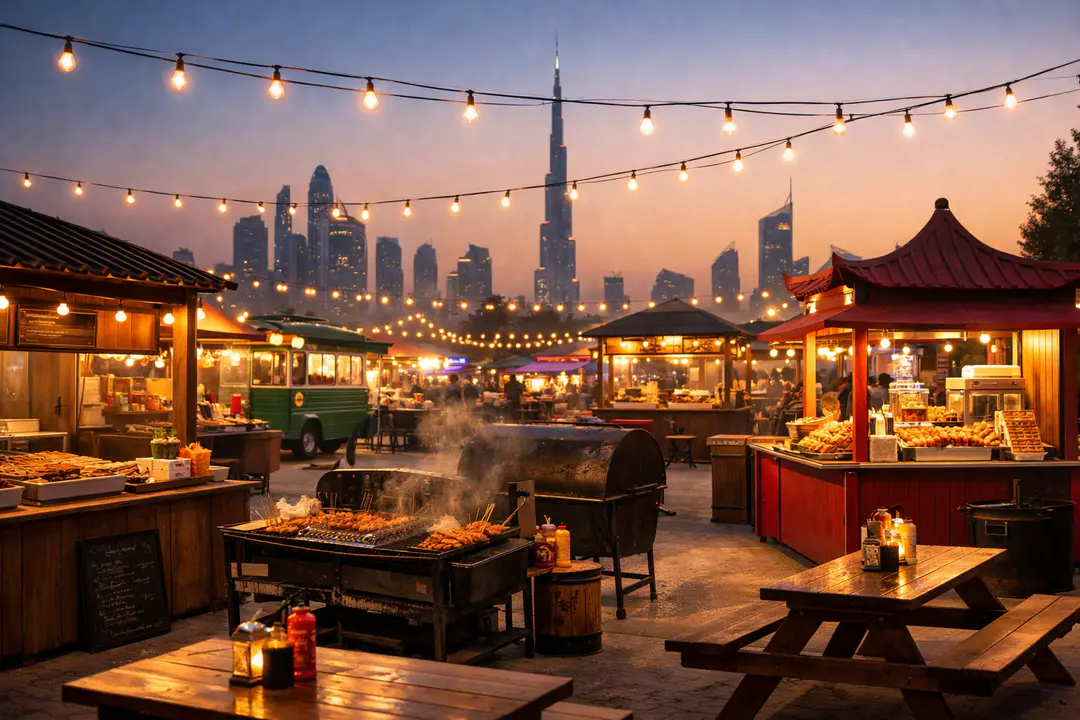


Taste of Dubai returns on February 6–8, 2026 at the Dubai Media City Amphitheatre—three days of taster-sized dishes, pop-up restaurants, live music, and chef-led workshops. The headline takeaway for planning your weekend: expect a 16-restaurant lineup with big-name crowd-pullers (including Akira Back, Demon Duck, Duck and Waffle, Indya by Vineet, Khadak, and Lena), plus the Taste Artisan Market and a dedicated VIP lounge option.
If you’ve ever tried to do a Dubai food festival “casually,” you already know how it goes: you arrive hungry, you queue without a plan, you blow your food vouchers on the first shiny thing you see, and suddenly it’s 9pm and you’ve missed the one workshop you actually wanted. This guide is built to prevent that.
Below you’ll get an overview of what the Dubai Street Food Festival 2026 lineup looks like in practice (Taste of Dubai’s festival format), who to prioritise, how ticket packages typically work (general admission vs Taster Package vs VIP Package), what’s worth booking early, and the on-site experiences that can make your day feel organised rather than chaotic. I’ve covered Dubai food events for years, and the best weekends always come down to smart timing and smarter tasting.
Dubai Street Food Festival 2026: Dates, Venue and Key Facts
Why it matters: if you treat this like a regular dinner reservation, you’ll miss half the value. Taste of Dubai is designed for grazing—small plates, quick demos, and lots of movement—so knowing the essentials upfront helps you plan around peak queues and sold-out workshops.
- Festival: Taste of Dubai (often searched as “Dubai Street Food Festival” due to its street-food style tastings)
- Dates: February 6–8, 2026
- Duration: 3 days
- Venue: Dubai Media City Amphitheatre
- Scale: expected to attract over 27,000 foodies
- Food lineup: 16 participating restaurants serving taster-sized dishes
- Format: pop-up restaurants + chef stages + workshops + live music + artisan market
What the “street food” angle looks like at Taste of Dubai
This isn’t a single street-food strip where you pay stall-to-stall with cash. It’s a curated food festival setup: restaurants build pop-up restaurants, serve short menus designed for quick turnaround, and portion dishes as taster-sized dishes so you can try multiple concepts in one visit.
Most visitors plan around three anchors: (1) a list of dishes they won’t compromise on, (2) a workshop schedule that fits their arrival time, and (3) a rough budget for food vouchers. Get those right and you’ll feel like you “saw” the festival, not just queued at it.
Quick planning note on timing
Queues spike around prime dinner hours. If you can arrive earlier, you’ll typically get faster ordering, better chances at popular dishes, and more space to browse the artisan market before it gets packed. If your group insists on arriving late, consider upgrading to a ticket package that improves comfort (especially if you want a base in the VIP lounge).
What Is the Dubai Street Food Festival 2026 Lineup? (Taste of Dubai Overview)
Why it matters: “lineup” doesn’t just mean names—it’s your cheat code for choosing dishes strategically. At a festival built on tasters, the best value comes from variety: one spicy dish, one grilled/open-fire plate, one carb hit, one dessert, and one wildcard.
The Dubai Street Food Festival 2026 lineup—as most people are searching for it—is essentially the roster of restaurants and chefs you can eat from, watch, and learn from across the weekend. In the Taste of Dubai format, that lineup is split into three practical categories:
- Restaurant pop-ups: 16 participating restaurants serving curated menus of taster-sized dishes.
- Chef appearances and workshops: live demos, Q&As, skills classes, and themed sessions (think sauces, grilling, plating, and regional street-food techniques).
- Experiences: live music stages, the Taste Artisan Market, and activation zones (often including open-fire cooking, BBQ sessions, and family-friendly activities).
Why it’s important: Dubai’s dining scene is enormous, but your time at a festival is limited. A good lineup helps you decide whether to attend at all (is it your style of cuisine?), and then helps you plan your spending once you’re inside (which dishes are “only at the festival” vs dishes you can easily order later at the restaurant).
In this guide I’ll map the lineup in a practical way—what to eat, who to watch, and how to build a festival schedule that actually works with queues, workshop timings, and the reality of food vouchers. For a side note on planning essentials when you’re out for hours (especially with kids), the same mindset you’d use for managing energy use and practicality at home applies here too: plan what matters, and you’ll enjoy the fun parts more.
Full 2026 Lineup — Restaurants (A–Z) and What They’re Serving
Why it matters: you can’t “eat everything,” but you can absolutely eat the best mix for your taste. Treat this as a shortlisting tool, then choose 6–10 tastings depending on your ticket package and appetite.
- Total restaurants: 16
- Style: pop-up restaurants with taster-sized dishes
- Best approach: pick 2 “non-negotiables,” 2 comfort picks, 1 spicy/strong flavour pick, 1 dessert, plus 1 wildcard
Akira Back
- Cuisine: modern Japanese-Korean
- Signature taster(s): expect a premium bite (think wagyu, crispy rice, or spicy tuna-style plates depending on the festival menu)
- Dietary notes: usually strong options for pescatarians; ask about gluten in sauces
Tip: This is often a “queue magnet.” Hit it early in your session, or later once the live music starts and crowds drift away from the food lanes.
Demon Duck
- Cuisine: Chinese-inspired duck house
- Signature taster(s): duck-forward bites, likely a bao or crispy duck portion designed for quick service
- Dietary notes: limited vegetarian choices; good for sharing plates
Common mistake: Ordering duck plus another rich fried dish back-to-back. Balance it with something acidic or fresh (salad-style taster, citrusy ceviche, or a lighter skewer).
Duck and Waffle
- Cuisine: modern British-European
- Signature taster(s): a simplified version of the duck-and-waffle concept is a safe bet at a festival
- Dietary notes: often easier to find non-spicy options here for mixed groups
Practical play: Use Duck and Waffle as your “steady” savoury pick—especially if you’re bringing someone who doesn’t want intense spice.
Indya by Vineet
- Cuisine: contemporary Indian
- Signature taster(s): street-food-inspired chaat-style bites, grill items, or a signature curry portion adapted for tasters
- Dietary notes: usually strong vegetarian choices; ask for spice level guidance
Tip: Great mid-session because Indian flavours reset your palate after mild dishes—just pair with something cooling (lassi-style drink if available, or a dessert later).
Khadak
- Cuisine: bold South Asian flavours (often spice-led)
- Signature taster(s): seek out their most “street” item—skewers, rolls, or saucy snack plates
- Dietary notes: ask about dairy and nuts in sauces
Common mistake: Skipping the napkins strategy. Saucy street-food plates are the fun part, but keep tissues or wipes if you’re moving between workshops and live music.
Lena
- Cuisine: contemporary (often Mediterranean/European-leaning in festival adaptations)
- Signature taster(s): expect a refined “small plate” with clean presentation
- Dietary notes: good option when you want something less heavy
Practical play: Use Lena as your “recovery” dish between richer picks like duck, fried plates, or creamy sauces.
More lineup notes (how to fill the remaining 10 spots)
Taste of Dubai’s full 16-restaurant roster typically spans a mix of crowd favourites, buzzy new openings, and concepts that translate well to high-volume service. If you’re deciding between two unknowns, choose based on what’s hardest to get outside the festival: open-fire plates, BBQ sessions, and limited-run specials often feel most “festival-exclusive.”
Shortlisting method:
- Choose one “grill/open-fire” dish (high aroma, fast satisfaction).
- Choose one “sauce-heavy” dish (curries, braises, sticky glazes) and eat it earlier while you’re freshest.
- Choose one “handheld” (bao, slider, taco-style bite) to eat while browsing the artisan market.
- Choose one dessert early if you hate long lines, or late if you like a sweet finish.
If you’re coming from a full day out and worried about comfort basics (shoes, lightweight layers, and staying presentable for photos), the same logic behind keeping fabrics fresh on the go applies—especially during warm evenings and crowded queues. A quick refresher on keeping outfits looking sharp without overthinking it is surprisingly useful for festival weekends.
Celebrity Chefs & Workshop Schedule: How to Watch, Learn and Eat Smarter
Why it matters: workshops turn a tasting event into an experience. You’re not just buying plates—you’re getting front-row techniques, flavour ideas, and often a chance to ask questions you’d never ask in a restaurant.
- What to expect: celebrity chefs, restaurant head chefs, and guest presenters
- Workshop themes: street-food classics, open-fire cooking, BBQ sessions, sauces and marinades, plating, and quick-home techniques
- How to plan: build your food voucher spending around the workshop blocks so you’re not queuing when you want to be seated
Sample “festival schedule” strategy (works even before times are published)
Even when the exact stage timings drop closer to the event, the flow is usually predictable. Use this skeleton and plug in the real sessions when they’re announced:
- First 45 minutes: buy/collect food vouchers, do one high-demand restaurant early (Akira Back-type pick), and grab a drink.
- Next 45–60 minutes: attend one workshop while queues build elsewhere.
- Mid-session: do two savoury dishes back-to-back (one grilled, one saucy), then browse the artisan market.
- Later: second workshop or a chef demo + one “comfort” dish (Duck and Waffle-type pick).
- Final hour: dessert + live music, or head to the VIP lounge if you upgraded.
What to listen for during chef demos
Chef stages can feel like entertainment, but you’ll get more value if you focus on three practical takeaways:
- Heat management: especially in open-fire cooking segments—watch where the chef places proteins relative to flame.
- Acid and balance: many street-food dishes “pop” because of citrus, pickles, vinegar, or yogurt—note the ratio.
- Finishers: herbs, chilli oils, crunch toppings, and last-minute sauces are the difference between okay and memorable.
Common mistakes with workshops
- Arriving late: you’ll stand at the back and miss the technique.
- Over-ordering right before: you end up holding food while trying to watch.
- Not factoring in travel time: the amphitheatre layout means you’ll want 10–15 minutes to move from a popular pop-up restaurant to a stage seat.
If you’re the type who likes to keep on top of what’s trending (including where event formats are headed), it can help to watch broader lifestyle shifts—food festivals have increasingly become “eat + learn + shop + listen,” not just plates on a field.
Ticket Types, Prices and What’s Included (General Admission to VIP)
Why it matters: ticket packages shape your whole day. The biggest difference isn’t just “better entry,” it’s how easily you can eat at peak times, access comfortable seating, and stay longer without burning out.
Note: Exact 2026 pricing can change by release phase (early bird vs last-minute). The table below explains what each style of ticket typically includes at this food festival, so you can choose the right value for your group.
| Ticket type | Best for | What’s usually included | Watch-outs |
|---|---|---|---|
| General admission | First-timers, casual visitors | Entry + access to live music, artisan market, and public stages | Food vouchers often separate; peak-time queues |
| Taster Package | People who want a predictable food budget | Entry + bundled food vouchers for taster-sized dishes | Know voucher values; don’t spend all vouchers too early |
| VIP Package | Comfort-first groups, client hosting | Entry + access to VIP lounge (often seating, dedicated bar, upgraded facilities) | Still plan meals—VIP doesn’t automatically reduce all queues |
How food vouchers usually work (and how to stretch them)
Most restaurants price each taster-sized dish in vouchers, not full meal pricing. The trick is to avoid spending all vouchers on the most expensive plates early. Instead:
- Start with one premium dish: Akira Back-style plate first while your excitement is high.
- Then switch to value tasters: street-food handhelds and grilled skewers often feel generous.
- Save 20–30%: keep a buffer for a second round of your favourite or a dessert you spot later.
When VIP makes sense
The VIP lounge earns its keep if you’re doing longer sessions, bringing guests who prefer guaranteed seating, or you want a “basecamp” between workshops and live music. If your group includes older relatives, pregnant guests, or anyone who needs breaks, the comfort factor can be the difference between staying two hours and staying the whole evening.
Music, Markets and Onsite Experiences (Beyond the Plates)
Why it matters: the best festival visits don’t feel like a checklist. Live sets and market browsing help you pace your eating, avoid queue frustration, and turn a meal into an actual night out.
- Live music: stage performances throughout the day and evening
- Taste Artisan Market: small-batch products, gifting, pantry items, crafts
- Experiences: chef demos, workshops, open-fire cooking and BBQ sessions
How to use live music to beat queues
A common pattern: food queues spike, then ease when a popular act comes on. If your priority is eating rather than camping at the stage, flip the typical approach:
- Eat during the start of a set (queues often dip).
- Watch during the middle of peak dinner if you hate lines.
- Do dessert later when people shift back to music and drinks.
Taste Artisan Market: what to buy (and what to skip)
The artisan market is best for items that travel well and feel “Dubai”: spice blends, sauces, honey, chocolate, pickles, coffee gear, and small kitchen accessories. It’s also a smart zone for families because it gives kids something to look at between food stops.
Tip: Don’t buy fragile or melty items too early unless you have a plan for carrying them. If your schedule includes lots of workshops and walking, shop later or pick shelf-stable goods.
Open-fire cooking and BBQ sessions: what’s worth your time
These areas are where festivals feel most different from restaurant dining. You’re watching direct heat, smoke, and fast finishing techniques. If you’re choosing between two workshops, prioritise the one that teaches transferable skills—how to control flare-ups, build rubs, or finish with a bright sauce rather than just watching a recipe.
How to Plan Your Visit: Vouchers, Families, Timing and Comfort
Why it matters: Taste of Dubai is popular (over 27,000 foodies is the claim), and popularity creates friction—queues, meeting points, and “what do we do next?” moments. A small plan keeps the day fun.
- Best overall tactic: arrive with a shortlist + a workshop plan + a voucher budget
- Family-friendly approach: build in breaks (music/market) so kids aren’t standing in lines back-to-back
- Comfort wins: good shoes, light layers, and a simple meet-up point
Step-by-step: a simple festival plan that works
- Pick your top 5 tastings (one premium, one grilled/open-fire, one spicy, one comfort, one dessert).
- Choose 1–2 workshops and treat them as “appointments.”
- Set a voucher rule: e.g., no more than 40% of your food vouchers in the first hour.
- Set a meet-up landmark (stage edge, artisan market entrance) in case the group splits.
- Keep water in rotation—especially if you’re stacking spice-forward dishes (Khadak/Indya-style picks).
Best times to eat (to minimise queues)
- Early entry window: fastest service at the biggest names.
- During workshops: many people are seated, so ordering can be quicker.
- During a headline music slot: queues often soften for 20–30 minutes.
Family-friendly tips
- Do handhelds first: fewer utensils, less mess while you’re getting settled.
- Use the artisan market as a reset: it’s a natural “walk and look” break.
- Skip ultra-saucy dishes early: save them for when you’re confident your group is staying put.
Common planning mistakes to avoid
- Trying to do all 16 restaurants: you’ll end up with bites you don’t remember.
- Ignoring seating needs: standing for hours changes everyone’s mood.
- Not accounting for weather: February is generally pleasant, but evenings can feel cooler—bring a light layer.
Practical Tips & Best Practices (Expert Playbook)
Why it matters: the difference between an okay visit and a great one is usually 5–6 small decisions—arrival time, voucher pacing, and not getting trapped in the busiest lane at the busiest hour.
- Build a “three-lane” plan: one high-demand restaurant, one backup nearby, one workshop to break up queues.
- Order for contrast: don’t stack rich-on-rich. Alternate fried/duck/cream with acid, herbs, or grilled items.
- Share strategically: if you’re in a group, split tastings so everyone tries more without overspending vouchers.
- Eat the fragile foods immediately: waffles, crispy items, and anything with crunch fades fast in open air.
- Use the VIP lounge intentionally: treat it like a recharge point, not where you hide all night.
- Keep one voucher reserve: you’ll find a surprise dish late; it always happens.
Things to avoid:
- Queue hopping without a plan: you waste time and get hungrier, which leads to impulse ordering.
- Skipping workshops entirely: they’re often the best “value add” beyond just eating.
- Overcommitting to spice: one spicy dish is exciting; three in a row dulls your palate.
Pro move for groups: assign roles. One person tracks the festival schedule, another holds the voucher plan, and another scouts the artisan market. It sounds extra, but it reduces the “what now?” loops that eat up your evening.
FAQ: Dubai Street Food Festival 2026 Lineup
What are the dates and location for the 2026 festival?
Taste of Dubai runs from February 6–8, 2026 at the Dubai Media City Amphitheatre. It’s a three-day food festival setup with restaurant pop-ups, live music, workshops, and the Taste Artisan Market.
How many restaurants are in the Dubai Street Food Festival 2026 lineup?
The key figure to plan around is 16 participating restaurants. Each builds a pop-up restaurant and serves a short menu of taster-sized dishes so you can try multiple concepts in one visit.
Which restaurants are the headline picks to look for?
Names to prioritise in your lineup include Akira Back, Demon Duck, Duck and Waffle, Indya by Vineet, Khadak, and Lena. These tend to attract strong interest, so plan them early or around workshop times to avoid long queues.
Do I need food vouchers, and how do they work?
Most festival dishes are sold as taster-sized portions and paid for with food vouchers (either purchased separately or bundled in a Taster Package). The best strategy is to set a budget, start with one premium dish, then mix in value tasters and save a small reserve for later.
Is the festival family-friendly?
Yes, it’s generally family-friendly thanks to the open venue layout, early arrival options, and non-food experiences like live music and the artisan market. Families do best by arriving early, choosing handheld dishes first, and using workshops or the market as breaks between queues.
Conclusion: Build Your Perfect 2026 Festival Hit List
Taste of Dubai at Dubai Media City Amphitheatre (Feb 6–8, 2026) is built for variety: 16 restaurants, taster-sized dishes, workshops, live music, and the Taste Artisan Market all running across three busy days. The smartest way to enjoy the Dubai Street Food Festival 2026 lineup is to treat it like a curated crawl—shortlist your top dishes (including heavy-hitters like Akira Back, Demon Duck, Duck and Waffle, Indya by Vineet, Khadak, and Lena), then place them into a simple schedule around workshops and queue patterns.
Decide your ticket package based on how you actually festival: general admission if you’re flexible, a Taster Package if you want a clear food voucher budget, or a VIP Package if you want a comfortable base in the VIP lounge. Once you’ve got that, the rest is easy—arrive with a plan, leave room for spontaneity, and make time for at least one chef demo so the night feels like more than just eating.
Next step: write your shortlist now (5 tastings + 1 dessert + 1 workshop), then adjust when the final festival schedule drops.